
News
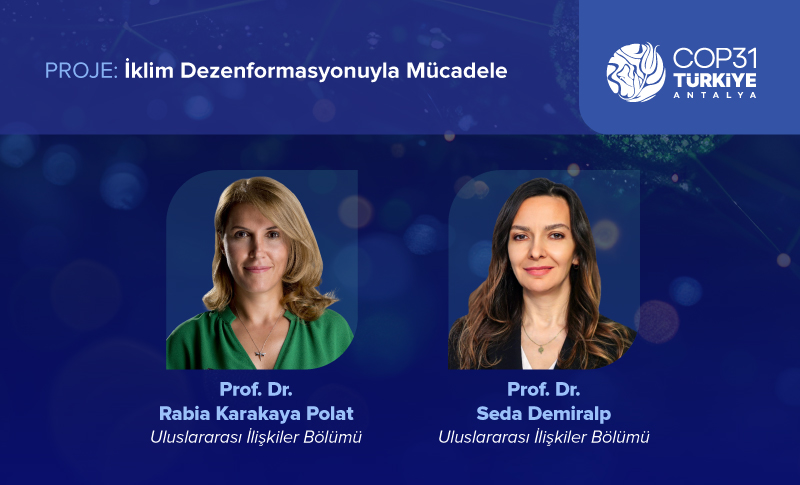
Işık University’s Panel on Combating Climate Disinformation Accepted for COP31
19 October 2026
The panel proposal, prepared with contributions from our university and focusing on innovative approaches to combating climate disinformation, has been accepted for the United Nations Climate Change Conference (COP31).
Our university is represented in the international collaborative project, which brings together 14 partners from Europe and Brazil, by Prof. Dr. Rabia Karakaya Polat and Prof. Dr. Seda Demiralp, faculty members of the Department of International Relations, through Emotics (Emotions & Politics Lab).
The panel, to be held as part of COP31, will explore why simply correcting misinformation is not enough to combat climate disinformation. It will introduce an alternative educational approach that addresses the challenge of social trust rather than focusing solely on a lack of information. Drawing on the dialogical pedagogy of Brazilian educator Paulo Freire, this approach aims to develop the skills communities need to investigate and question disinformation for themselves.
The session will also present the climate literacy programme and educational materials to be developed as part of the international collaborative project, while discussing the comparative contributions of the research conducted in Türkiye at Işık University. In addition, it aims to foster new international collaborations involving universities, researchers, educators and youth networks from different countries.
The panel’s acceptance for COP31 will bring the work of Işık University and Emotics Lab on disinformation, social trust and climate action to the forefront of the global science and policy agenda.